Everything You Need to Know About Dumpster Sizes, Rental Costs, and Waste Disposal
Renting a dumpster for the first time might seem complicated, but the process is actually pretty straightforward. Whether you’re cleaning out your garage, renovating your home, or managing a construction project, having the right dumpster makes waste removal much easier.
At King Dumpster Co, we’re committed to helping homeowners, contractors, and businesses find dependable dumpster rental solutions without unnecessary complications.
Before renting a dumpster, it’s helpful to understand the available sizes, common uses, rental costs, and important things to consider when planning your cleanup.
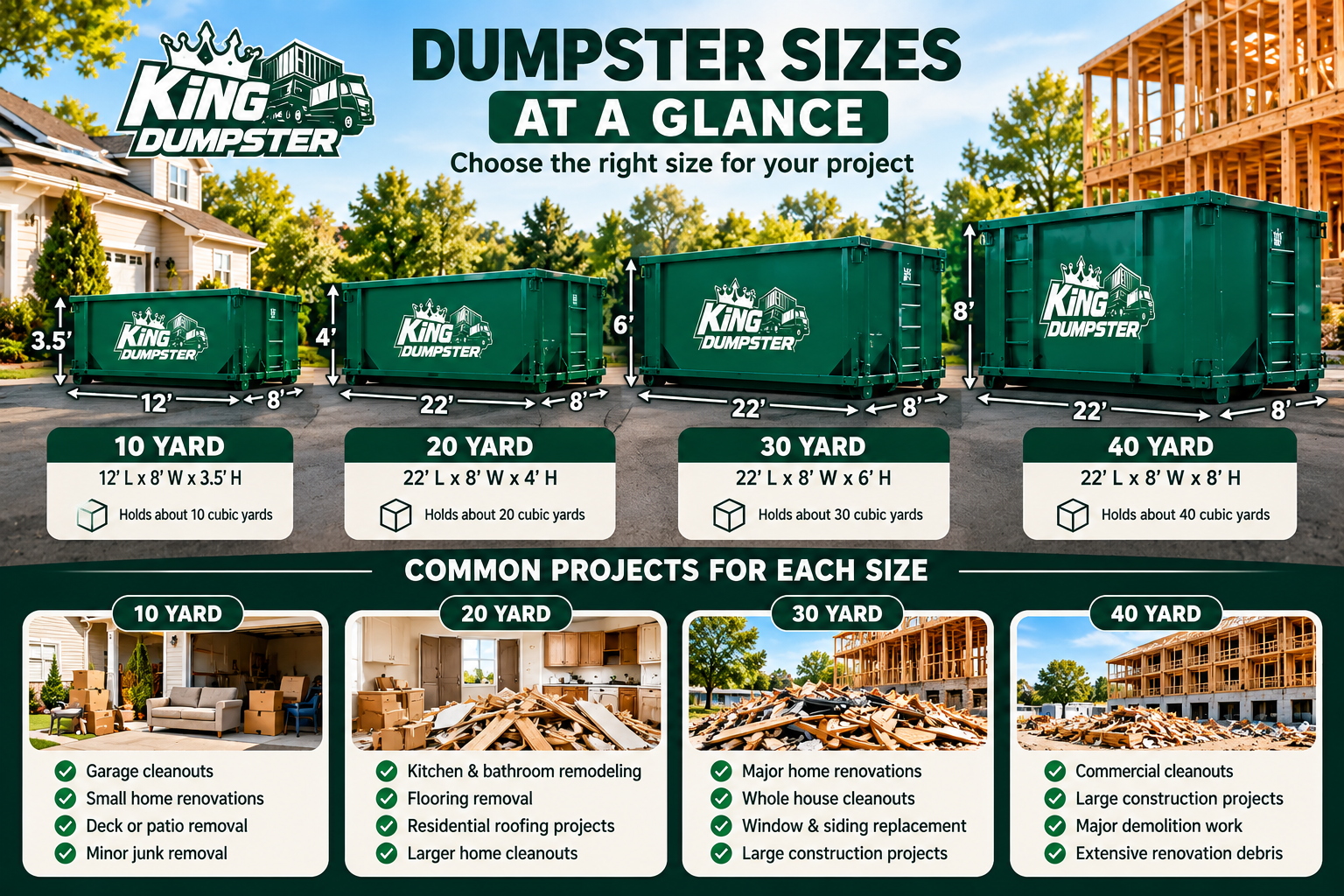
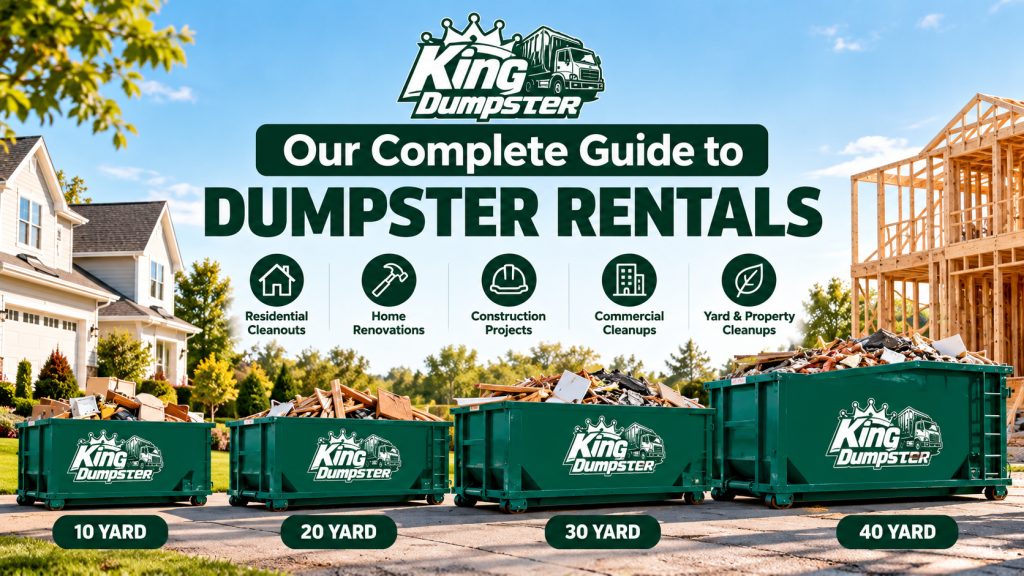
Residential dumpsters, commonly called roll-off dumpsters, are available in several sizes to accommodate different cleanup projects.
At King Dumpster Co, our dumpster rental options include:
Roll-off dumpsters are large, open-top containers delivered using specialized trucks. Many containers include rear doors that allow customers to walk heavier or bulkier materials directly inside rather than lifting everything over the sides.
When your cleanup is complete, the dumpster is loaded back onto the truck and transported for disposal.
Choosing the correct dumpster size helps you avoid unnecessary rental expenses and ensures you have enough room for your waste.
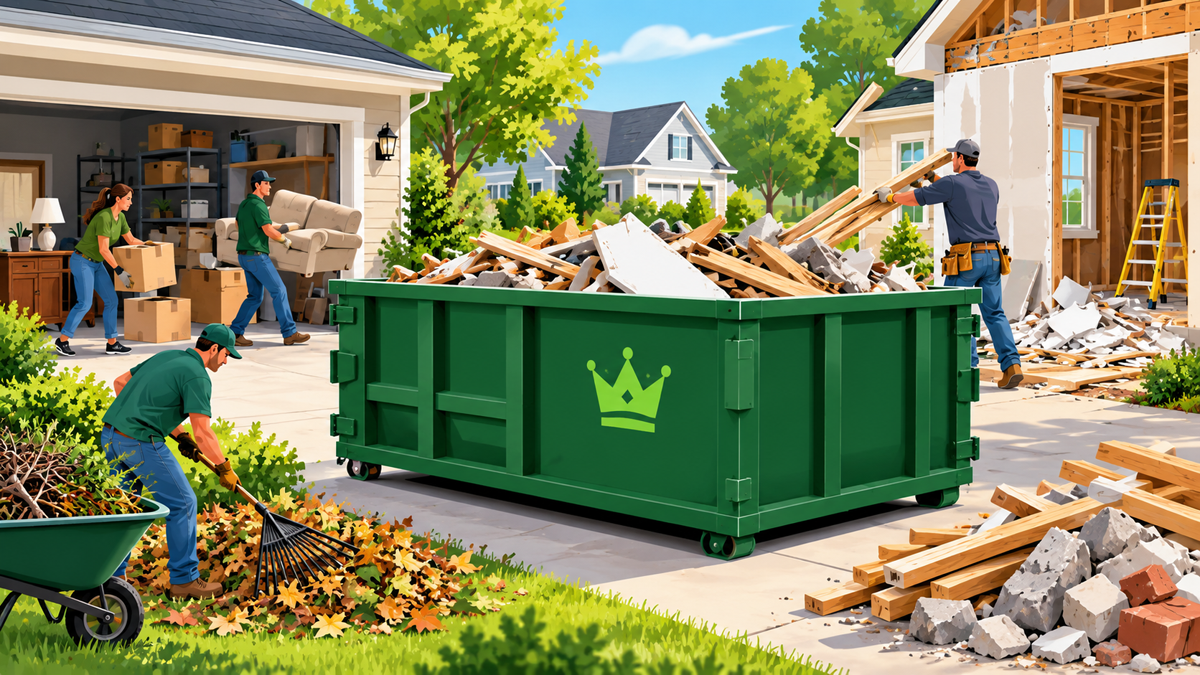
You don’t need to be working on a major construction project to benefit from a dumpster rental. Roll-off dumpsters are useful for everyday household projects and larger commercial jobs.
Common reasons to rent a dumpster include:
Renting a dumpster allows you to handle larger amounts of waste without making repeated trips to a disposal facility.
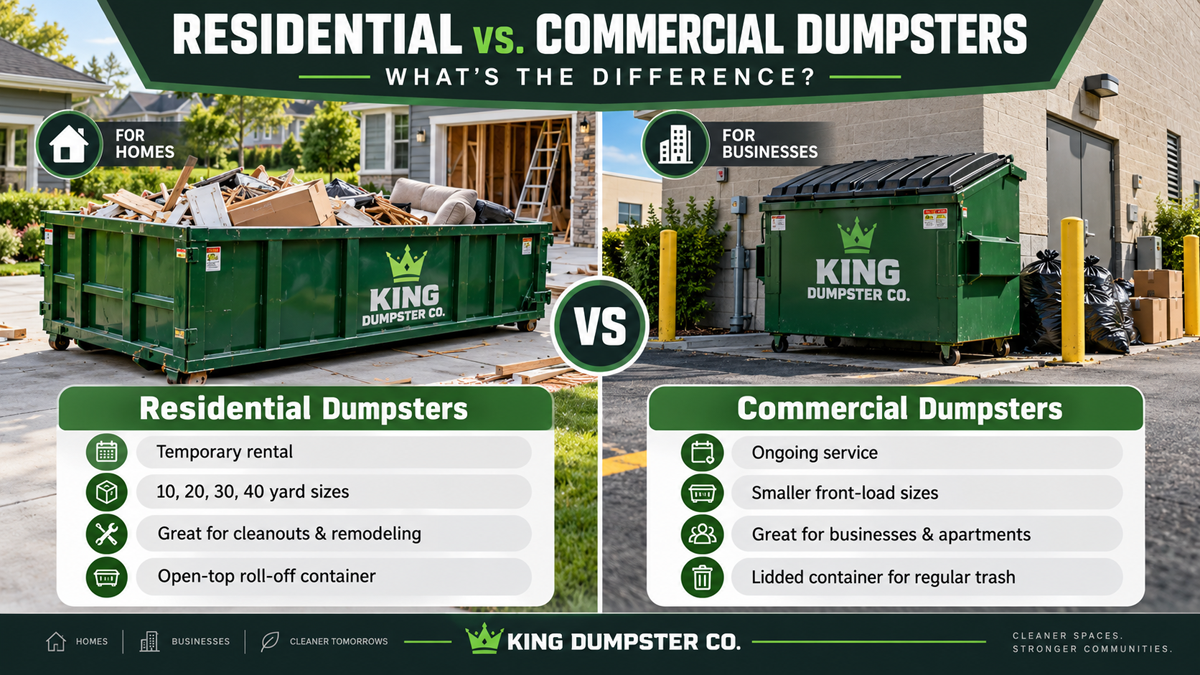
Not all dumpsters are designed for the same purpose. Understanding the difference between residential roll-off dumpsters and traditional commercial trash containers can help you choose the right option.
Residential roll-off dumpsters are generally open-top containers used for temporary cleanup projects.
They are commonly available in sizes ranging from 10 to 40 cubic yards and are delivered for a specified rental period.
These dumpsters are useful for home renovations, large cleanouts, remodeling projects, and property maintenance.
Traditional commercial dumpsters are often smaller containers used for ongoing waste collection at businesses, apartment complexes, restaurants, and retail properties.
They commonly range from 2 to 8 cubic yards and may include lids to keep trash contained and help protect against weather and pests.
Unlike temporary roll-off rentals, these containers are typically emptied on a regular collection schedule.
King Dumpster Co focuses on roll-off dumpster rental solutions for residential, construction, and commercial cleanup projects.
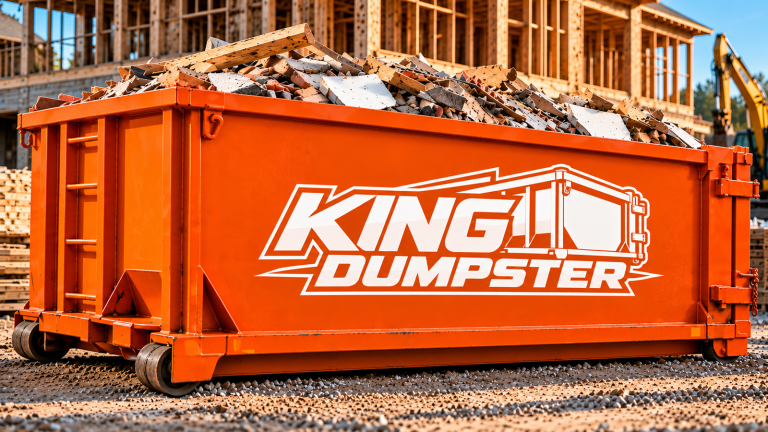
Construction dumpsters are designed to accommodate larger amounts of debris generated during building, remodeling, and demolition projects.
These containers are typically open-top roll-off dumpsters that make it easier to load construction waste and bulky materials.
Common uses include:
Construction waste can be considerably heavier than regular household junk. Materials such as concrete, roofing shingles, bricks, and dirt may require specific containers or special weight arrangements.
Before renting, confirm which materials are accepted and whether your project has any additional disposal requirements.
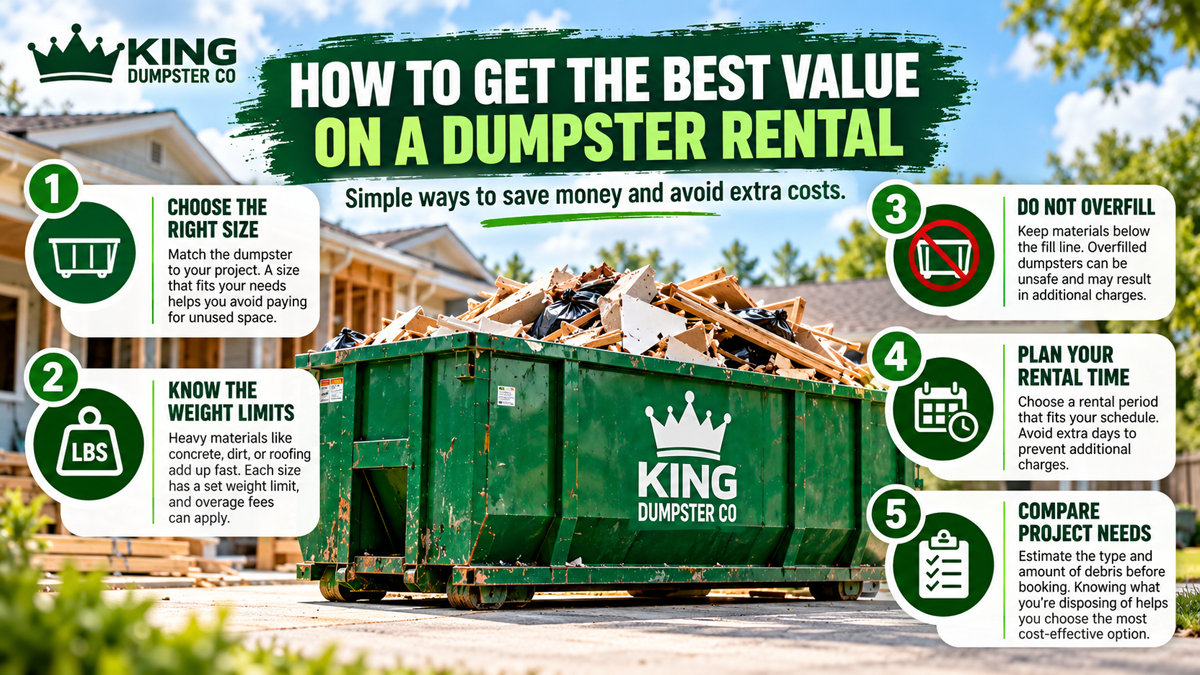
Dumpster rental prices can vary depending on container size, rental duration, delivery requirements, waste type, and disposal costs.
Here are some practical ways to manage your rental expenses.
Selecting the correct container is one of the most important decisions when renting a dumpster.
A smaller dumpster may cost less initially, but choosing a container that cannot hold all your debris could result in the need for another rental.
For example, if you’re planning a major home renovation, a 20 or 30 yard dumpster may be more practical than renting multiple smaller containers.
Consider how much waste your project will produce before making your decision.
Dumpster rental agreements typically include a specified weight allowance.
If your debris exceeds that limit, additional disposal charges may apply.
Heavy materials such as concrete, roofing shingles, dirt, and construction debris can increase the total weight quickly.
Ask about weight restrictions and potential overage fees before confirming your rental.
Some waste materials may qualify for different disposal arrangements depending on local facilities and rental requirements.
If you’re disposing of only one type of material, such as concrete, roofing shingles, or clean wood, ask whether any special loading or pricing options are available.
You can also reduce the amount of waste entering your dumpster by donating reusable household items or using appropriate recycling facilities independently.
Before booking your dumpster, make sure you understand the rental agreement.
Important details to confirm include:
Understanding these terms helps you plan your project and avoid unexpected expenses.
Dumpster demand can increase during busy construction and home improvement seasons.
If you have a specific project start date, arranging your rental ahead of time can help ensure suitable container availability.
When scheduling delivery, provide clear information about your property, placement preferences, and access requirements.
Proper dumpster placement is important for both delivery and pickup.
Driveways and other firm, level, accessible areas are commonly used for temporary dumpster placement.
Before delivery, check that the selected area has enough room for the container and the delivery truck.
Keep these points in mind:
If the dumpster will be placed on a public street or right-of-way, a permit may be required.
Keeping the placement area accessible can also help prevent delays or additional pickup charges.
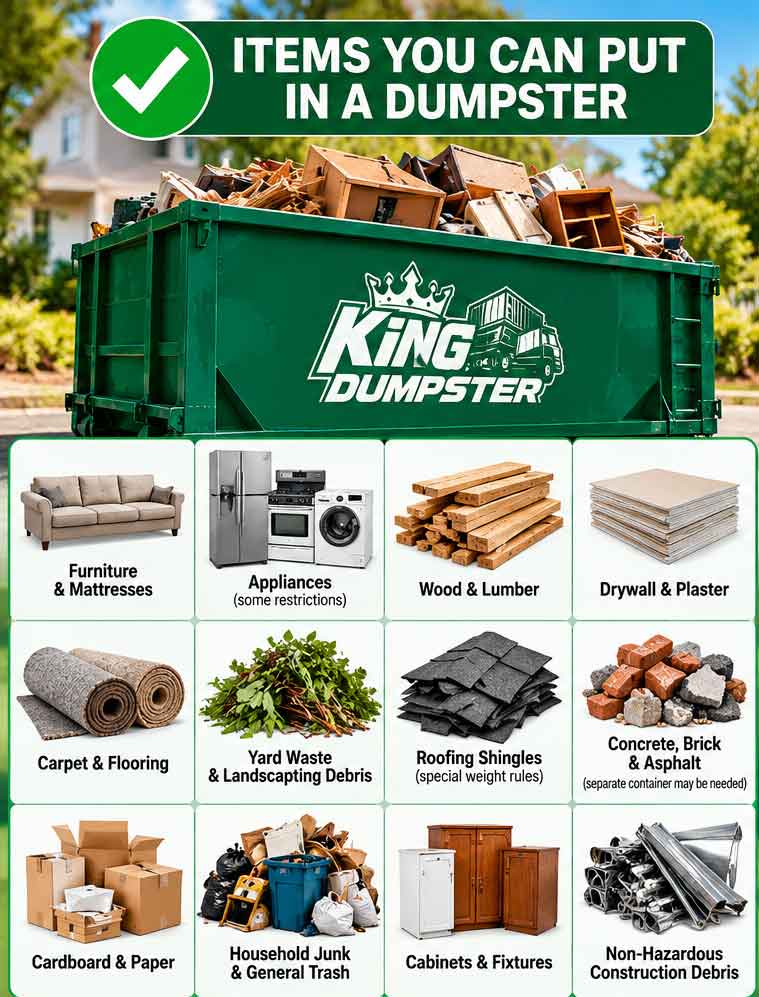
Roll-off dumpsters can accommodate many types of household junk, renovation materials, and construction debris.
Commonly accepted items may include:
However, some materials are restricted or require special disposal arrangements.
These may include hazardous chemicals, fuels, batteries, paint, tires, and certain appliances or electronics.
Always confirm accepted materials with King Dumpster Co before loading your container. Disposal rules and additional fees can vary by material and service area.
Loading your dumpster correctly helps maximize available space and supports a smooth pickup.
Start by placing heavier, approved items near the bottom of the container. Distribute materials evenly rather than concentrating all the weight on one side.
Break down bulky items when practical and place smaller debris into available spaces.
Avoid filling the dumpster above its designated loading line. Containers that are overloaded or contain materials extending beyond the top may not be safe to transport.
Keep the dumpster doors closed and secured when loading is complete.
Never enter a dumpster containing unstable debris or attempt to handle hazardous materials without appropriate precautions.
Renting the right dumpster can make a big difference in how smoothly your cleanup project runs.
Whether you’re removing unwanted household items, remodeling a property, or managing a construction site, choosing the correct container size and understanding the rental requirements helps you save time and stay organized.
At King Dumpster Co, we focus on making waste removal simple with competitive rental options, convenient delivery and pickup arrangements, and helpful customer support.
Our 10, 20, 30, and 40 yard roll-off dumpsters provide practical solutions for projects of different sizes.