Renting a dumpster is a convenient way to handle waste from home cleanouts, renovations, construction projects, and property maintenance. However, not everything can be placed inside a roll-off dumpster.
Certain materials are restricted because of environmental regulations, safety concerns, or special disposal requirements. Understanding what is allowed before filling your dumpster can help you avoid unexpected fees, pickup delays, and disposal problems.
At King Dumpster Co, we help homeowners, contractors, and businesses choose suitable dumpster rental options while providing guidance on accepted materials and waste disposal requirements.
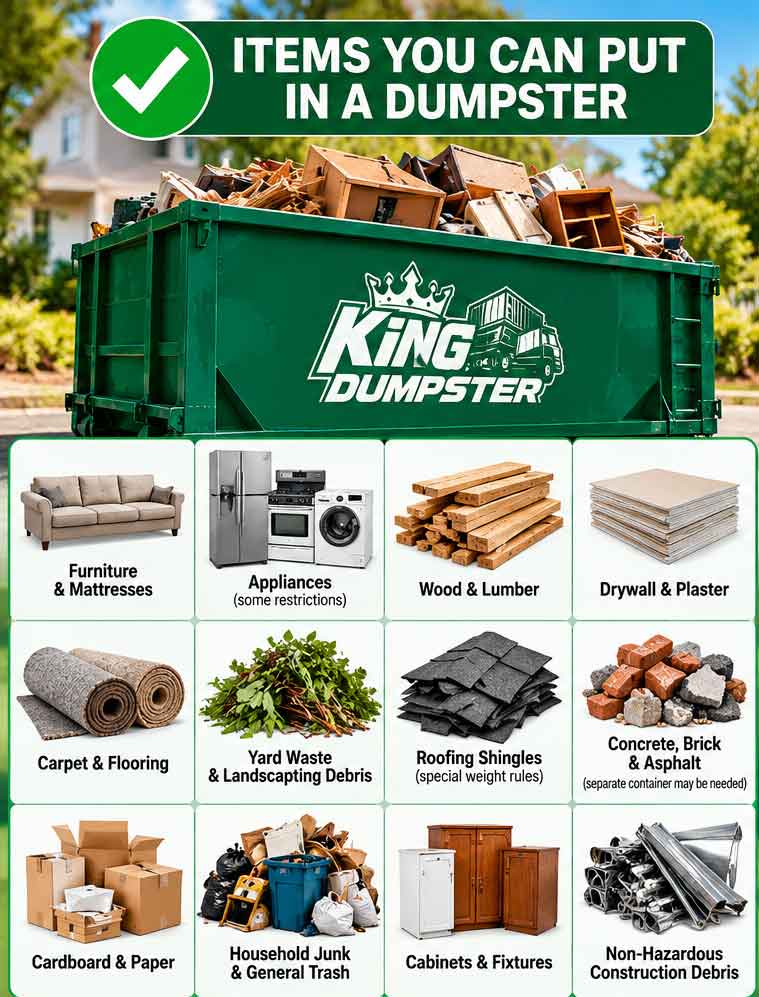
Most roll-off dumpsters are designed to accommodate non-hazardous household junk, furniture, construction debris, and certain types of yard waste.
However, accepted materials may vary depending on your service area, dumpster size, and disposal facility requirements.
Here are some common materials that may be accepted in a rental dumpster.
Roll-off dumpsters are commonly used for removing unwanted household items during moving, decluttering, and property cleanouts.
Commonly accepted items include:
For larger household cleanouts, a 20 or 30 yard dumpster may provide enough space for bulky items and accumulated waste.
Many dumpster rental services accept common household furniture, making it easier to clear unwanted items from homes, offices, and rental properties.
Examples include:
Mattresses, box springs, and upholstered furniture may have special disposal restrictions or additional fees.
Before loading these items, confirm whether they are accepted under your rental agreement.
Some household appliances may be accepted in dumpsters, but certain types require special handling.
Washing machines, dryers, and other appliances may be subject to additional disposal requirements.
Refrigerators, freezers, and air conditioners contain refrigerants that must be handled properly. Federal regulations require appropriate refrigerant recovery or verification before disposal of covered equipment.
Do not attempt to release or remove refrigerant yourself. Use an appropriately qualified professional or approved disposal program.
You can also explore appliance recycling programs through local utilities or the EPA’s Responsible Appliance Disposal resources.
Electronic waste includes computers, televisions, printers, and other electrical devices.
Some disposal facilities restrict electronics because they contain materials requiring special handling.
Common examples include:
Many communities provide dedicated electronic waste collection programs.
Before placing electronics in a dumpster, confirm whether they are accepted. For larger quantities, an approved e-waste recycling facility may be a better option.
Dumpster rentals can be helpful for major landscaping projects, property maintenance, and outdoor cleanups.
Depending on local disposal rules, accepted yard materials may include:
Some disposal facilities require yard waste to be separated from household trash or construction debris.
Large tree stumps, dirt, and soil may also have special weight or disposal restrictions.
If your project involves landscaping debris, discuss the materials with King Dumpster Co before scheduling your rental.
Roll-off dumpsters are widely used for residential renovations, construction projects, and property remodeling.
Common construction materials include:
Certain construction materials may require separate disposal arrangements.
For example, asbestos-containing materials, contaminated debris, and some types of insulation should never be placed in a standard dumpster without specific authorization.
Always confirm material acceptance before loading construction waste.
Heavy construction materials such as concrete, bricks, and asphalt may be accepted under specific rental arrangements.
However, these materials are significantly heavier than ordinary household waste.
Even a relatively small amount of concrete can use up a dumpster’s weight allowance.
For projects involving heavy debris, you may need a dedicated container or a specific loading limit.
Important: Do not mix concrete, dirt, or other heavy materials with general household waste unless your rental agreement permits it.
Roof replacement projects can generate substantial amounts of debris, including asphalt shingles, underlayment, and other roofing materials.
Roll-off dumpsters are commonly used to manage this waste.
However, roofing shingles are heavy and may require special weight allowances or disposal arrangements.
Before renting a dumpster for a roofing project, estimate the amount of material being removed and confirm the applicable weight restrictions.
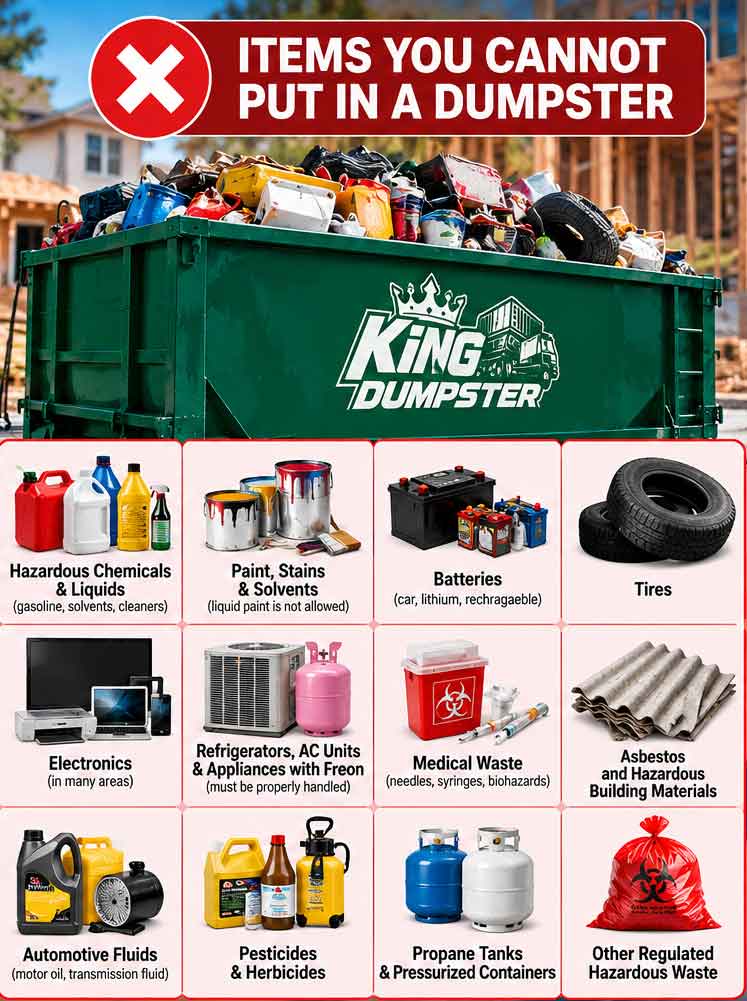
While dumpsters accommodate many types of waste, certain materials are generally prohibited from standard roll-off containers.
These restrictions help protect workers, transportation equipment, disposal facilities, and the environment.
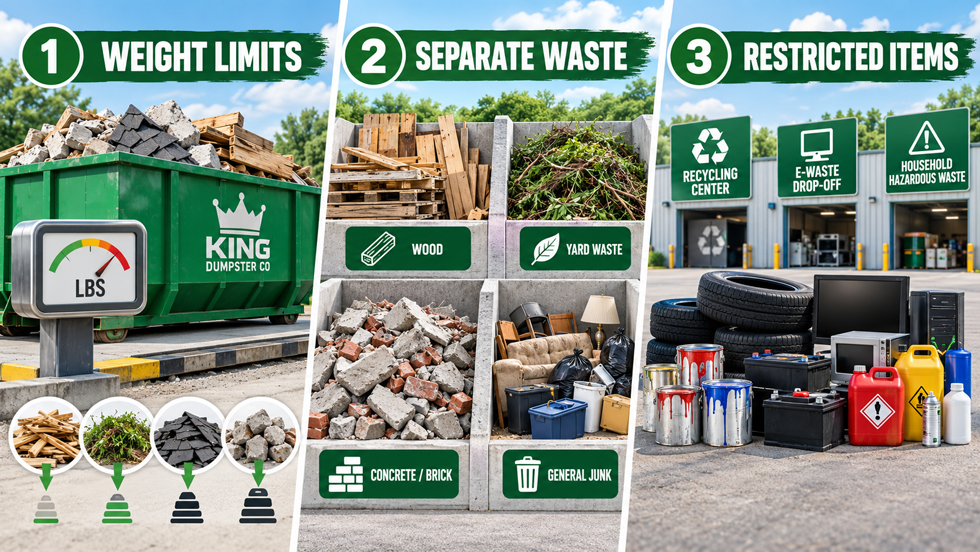
Hazardous waste should not be placed in a standard rental dumpster.
Common examples include:
These materials may require disposal through a household hazardous waste collection facility or another approved service.
Liquid paint, wood stains, lacquers, and paint thinners may be restricted because of their chemical composition and potential environmental impact.
Latex paint may sometimes be accepted after it has been completely dried or solidified, depending on local regulations.
Oil-based paints and solvents generally require special disposal.
Always confirm the applicable requirements before placing any paint containers in a dumpster.
Many batteries contain hazardous materials or create fire risks when damaged.
Common restricted items include:
Lithium-ion batteries are particularly concerning because they can cause fires when crushed or damaged during waste handling.
Use designated battery collection programs or approved recycling locations instead of placing batteries in regular dumpsters.
Automotive tires are commonly restricted from standard dumpster disposal.
Tires may require special handling because of their durability, storage requirements, and disposal regulations.
Many tire retailers, automotive service centers, and approved collection facilities accept used tires, sometimes for an additional fee.
Medical waste can pose serious health and safety risks.
Do not place the following items in a standard rental dumpster:
These items should be handled through appropriate medical waste collection and disposal programs.
Older buildings may contain asbestos-containing materials in insulation, flooring, roofing, and other construction products.
Asbestos requires special handling because exposure to airborne fibers can create serious health risks.
Suspected asbestos-containing materials should be evaluated and handled by qualified professionals in accordance with applicable regulations.
Never place asbestos or other regulated hazardous building materials in a standard dumpster without proper authorization.
Dumpster capacity is measured in cubic yards, but rental agreements also typically include a weight allowance.
This distinction is important because some materials are much heavier than others.
For example, a dumpster filled with cardboard will generally weigh far less than one containing concrete or roofing shingles.
Common factors affecting dumpster weight include:
If your debris exceeds the included weight allowance, additional disposal charges may apply.
Before renting your dumpster:
At King Dumpster Co, we recommend discussing heavy materials before booking so you can understand the rental requirements.
Separating materials can make waste disposal more manageable and may help you comply with disposal facility requirements.
For example, clean concrete, yard debris, roofing shingles, or recyclable materials may be handled differently from mixed household waste.
Some facilities offer dedicated disposal options for specific materials.
However, mixing incompatible materials can create problems during hauling and disposal.
Before loading a dumpster with multiple waste types, confirm that the combination is accepted.
Tip: If you’re disposing of only one type of material, ask whether a dedicated container or special disposal arrangement is available.
Some materials are better handled through specialized collection or recycling programs rather than regular dumpster rentals.
Look for approved electronic waste collection programs for computers, televisions, tablets, and other electronics.
Check with local appliance retailers, utilities, or authorized recycling facilities for refrigerators, air conditioners, and other equipment requiring special handling.
Many automotive service centers and designated collection facilities accept used motor oil and related fluids.
Contact tire retailers or approved tire collection facilities about disposal options and applicable fees.
Use designated collection programs for rechargeable batteries, lithium-ion batteries, and automotive batteries.
Contact the appropriate local waste management authority for information about chemical, paint, pesticide, and hazardous household waste collection.
Availability and acceptance requirements vary by community.
Once you’ve confirmed which materials are permitted, loading your dumpster correctly helps prevent problems during pickup.
Follow these general recommendations:
Overfilled dumpsters can create transportation hazards and may result in delayed pickup or additional charges.
If you’re unsure whether an item is accepted, contact King Dumpster Co before placing it in the container.
Different cleanup projects require different dumpster sizes and disposal arrangements.
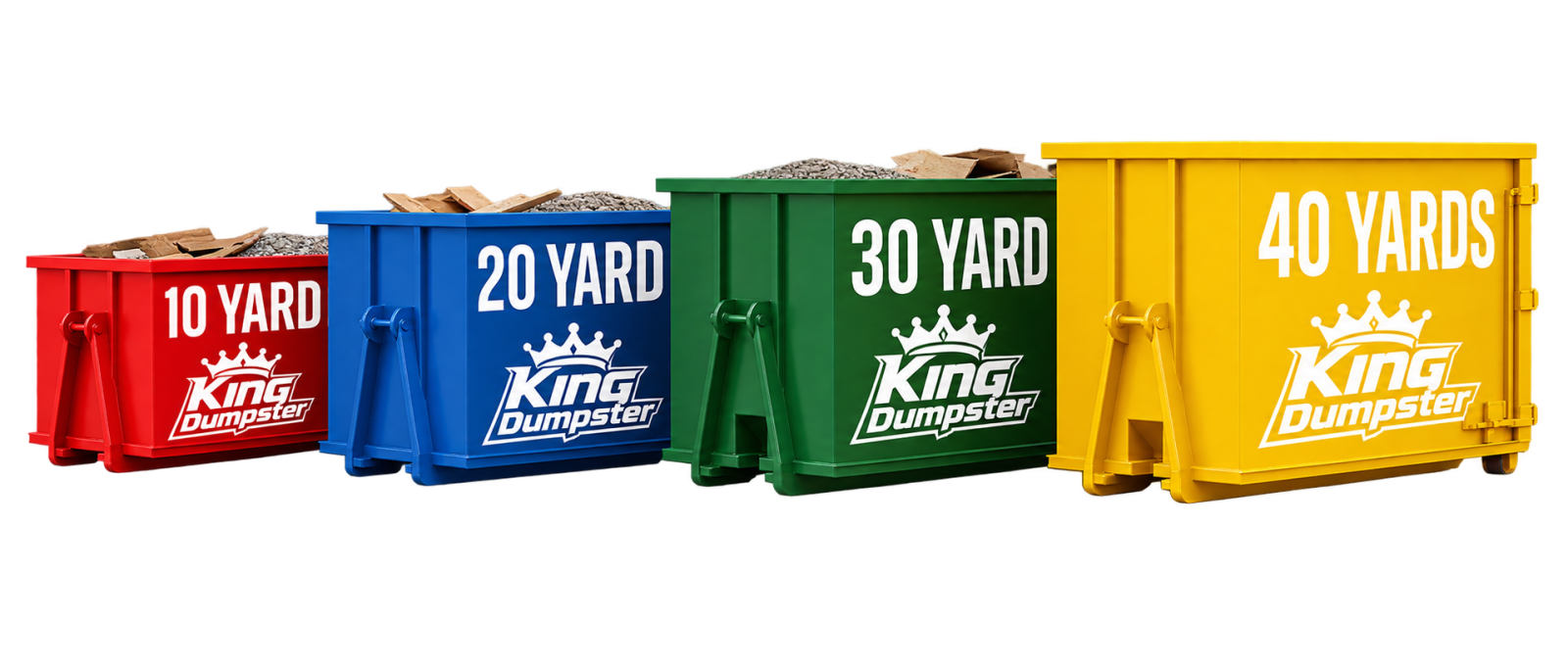
At King Dumpster Co, our rental options include:
10 Yard Dumpster: Suitable for smaller household cleanouts, garage decluttering, and minor remodeling jobs.
20 Yard Dumpster: A practical choice for medium-sized renovations, flooring removal, and larger residential cleanouts.
30 Yard Dumpster: Designed for major home renovations, property cleanouts, and construction projects.
40 Yard Dumpster: Ideal for large commercial cleanouts, major construction work, and extensive renovation projects.
Selecting the correct container depends on both the amount of debris and the materials being disposed of.
Understanding which materials are allowed in a dumpster is an important part of planning an efficient cleanup.
While most non-hazardous household junk and many construction materials may be accepted, hazardous waste, certain electronics, batteries, tires, and other restricted items often require special disposal methods.
Before scheduling your dumpster rental, review accepted materials, weight allowances, and any additional disposal requirements.
At King Dumpster Co, we’re committed to making dumpster rentals straightforward with convenient rental options, helpful customer service, and practical waste removal solutions.
Whether you’re planning a home cleanout, renovation, or construction project, King Dumpster Co can help you choose a suitable dumpster for your waste removal needs.
Contact us to discuss your project, confirm accepted materials, and explore available dumpster sizes.